The AI community is buzzing with demos of autonomous agents performing seemingly magical feats—booking flights, trading stocks, or even conducting entire research projects. While these demos are impressive, their real-world applicability is often limited. Most of these agents fail to transition from flashy proofs-of-concept to reliable, domain-specific workhorses.
This disconnect became painfully clear when a Fortune 500 client recently approached us. They had spent months trying to implement a "general-purpose" AI agent they'd seen in a viral demo. The agent was supposed to handle everything from data analysis to report generation. Instead, it consistently produced hallucinated insights and crashed when faced with their complex enterprise database schema. After three failed deployments, they realized they needed a different approach.
This experience reinforced what we've been teaching: the most impactful AI agents aren't the ones that can do everything, but the ones that can do one thing exceptionally well. Enter Vertical Agents—domain-specific AI workers designed to handle structured, repeatable workflows.
Why Most AI Agents Fail in the Real World
The core problem with many AI agents today is that they attempt to be too general-purpose. A single agent designed to do "everything" is unlikely to perform well in a structured enterprise workflow. Here are three major challenges we consistently observe:
-
Ambiguity in Real-World Workflows – Unlike controlled demo environments, business tasks involve ambiguous requirements, incomplete data, and nuanced decision-making. That viral demo showing an agent "analyzing sales data" likely used clean, perfectly formatted datasets—a far cry from the messy, incomplete data most enterprises deal with daily.
-
Lack of Integration with Enterprise Systems – Most AI demos operate in isolation. In real enterprises, agents need to interact with legacy databases, navigate complex API authentication, and integrate with existing knowledge management systems that have been built up over decades.
-
Hallucination and Lack of Trust – For AI agents to be adopted, they must be reliable. A one-off success in a demo is irrelevant if the agent can't consistently perform well on enterprise-grade tasks. One client described their experience: "It worked perfectly in the pilot, then gave us completely wrong financial projections when we tried it on real quarterly data."
The Case for Vertical AI Agents
Instead of building broad, generalist agents, successful enterprises are focusing on Vertical Agents—highly specialized AI workers optimized for domain-specific tasks. These agents don't try to be all-knowing; instead, they are fine-tuned to handle structured workflows with precision, accuracy, and repeatability.
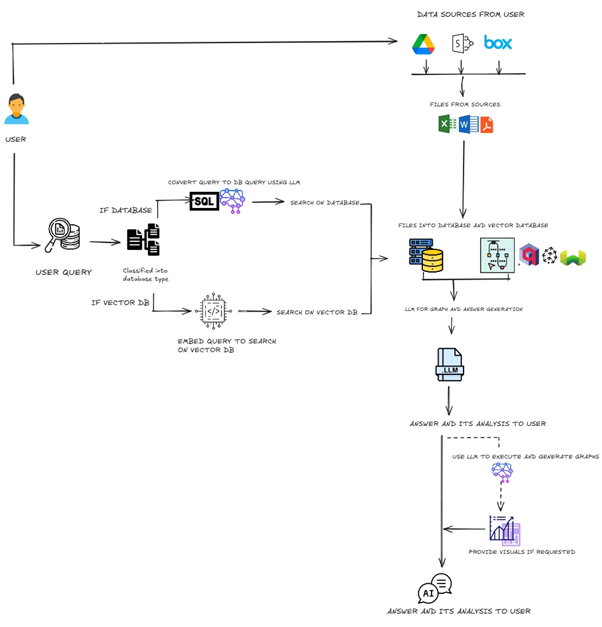
Consider the difference: rather than building an agent that "does business intelligence," build a Data Analyst Agent that specifically excels at SQL query generation, data validation, and report formatting for your company's unique data architecture.
Real-World Case Study: The Data Science Agent (Olive)